
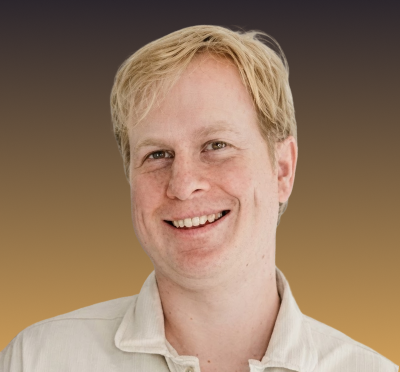
Few people take the scenic route into AI quite like David Josephs. Before joining Andesite as a Machine Learning Engineer, he chased asteroid shadows across South Africa and Patagonia, built sensors for smart prosthetics, developed models that spot disasters in oil and gas operations before they happen, and used brain signals to help diagnose epilepsy. At Andesite, he’s built everything from data connectors to the evaluation framework that lets us ship improvements with confidence. Today he’s focused on helping the product understand its own work, so it can guide analysts through their workflows. What ties it all together? He’s happiest when his work makes someone’s life better.
Sounds like you’ve taken an interesting path to AI. What did the journey look like?
I got my BS in Aerospace, Aeronautical and Astronautical Engineering, and Astronomy from the University of Virginia, followed by an MS in Data Science from Southern Methodist University. I held a number of astronomy-related positions, including working as an astronomer, translator, and scout for the Southwest Research Institute and later as a researcher at the NASA Goddard Space Flight Center.
The parts of astronomy I really liked involved crunching the numbers. I loved taking messy telescope data and finding the patterns that tell you something new about the world. After taking a PhD astrophysics course, I started doing practical astronomy with my professor. One night, at 3 a.m. in the cold, I heard him crunching on something. It was instant coffee crystals. He told me he did that every night. I realized that as much as I liked astronomy, I didn’t want to be up all night for the rest of my life. So I pivoted to data science and machine learning. That turned out to be a well-timed choice.
For a while, I worked on sensors for smart prosthetics, something that would let you think about moving your hand and have the electricity going through your arm tell the prosthetic to move at the same speed as if you still had your own hand. From there, I switched to the oil and gas industry, where I focused on identifying catastrophes before they happen. After that, I worked on sensors that measure electricity in the brain to help diagnose conditions like epilepsy or show whether a medication measurably improved someone’s insomnia.
That path led me to Andesite at a remarkable moment. AI lets people do things that were out of reach not long ago, for better and for worse, and we’re protecting organizations whose work really matters. It’s exciting to have a real shot at stopping bad things before they happen.
What’s your take on all the drama around AI right now?
From what I can see, I don’t think AI is some kind of sentient being. But in my own work, I can see how I could be a few bad decisions away from making a serious mistake. When you use AI to code, for example, it’ll sometimes respond to an issue by offering to delete part of your database. If you connected it to something more critical than a database, similar mistakes could happen very easily.
It doesn’t really matter whether the AI is being super crafty or the people using it aren’t being very smart. Either way, the result is the same. That’s why I feel fortunate to work at Andesite. Our platform helps analysts catch harmful activity, whether it comes from bad intent or an honest mistake.
That’s why I think putting humans at the helm is the right approach, especially for anything of consequence. If I write a prompt that isn’t perfectly clear and an agent misinterprets it, it could do something very wrong. In cybersecurity, accidentally taking an action you shouldn’t have can cause really big issues. Having people in control and able to audit and verify everything that’s going on is really important. It’s a hill to die on.
What drew you to machine learning?
Originally, it was the math. It’s really fun! Beyond that, I like having real-world applications where I can make life better for people. At my first job, we built a very small model that was basically an “is this thing going to catch on fire?” detector. It didn’t take much work, but everyone who used it told us it made their life a lot better. That feels like magic. Sometimes what you’re trying doesn’t work, and that’s fine. But when it does, you can go from nothing to an almost completely solved problem relatively quickly by building a system that dramatically improves things for someone else. That’s the amazing part about machine learning.
What attracted you to Andesite, and what makes it a good fit for you?
Coming from a traditional R&D role, I wanted a place where I could make a real impact, and Andesite offered exactly that. Our CTO, Alex Thaman, talks a lot about our bias toward action and how each of us can shape not just the culture but the people around us, because we’re working on problems that matter. That was a big draw; so is working alongside some of the smartest people I’ve ever met. I feel very lucky to be here, and to be on this path where we have the opportunity to do something really important.
What is most exciting about what you’re currently developing?
Security teams are constantly overwhelmed, and they’re juggling a lot of tools they may not know well. That makes any new tool hard to learn, including ours. But people are now used to just asking a question in a chat. So we’re giving Andesite’s chat access to the Andesite app itself. You can ask it to find specific alerts and show who acted on them, and the agent will do it for you. Along the way, you see where to go in the app and how to filter the results yourself. Users can run advanced automations and learn how Andesite works, all in the same conversation.
Before that, I worked on integrations. Every security product has a right way to use it, and our job was to make those products shine for analysts who don’t know them well, whether they’re new, junior, short on time, or just overwhelmed. Now we’re asking the same question about Andesite: how does an analyst who’s never seen it get the most out of it? We have the big foundational pieces in place. The work now is making sure people can see what we’ve built in a way that makes sense and feels good to use.
How do you see Andesite continuing to evolve?
We’ve built a platform that generates insights across disparate data sources. In a way, that’s what every job I’ve had has been about. At one company, it was oil and gas data. At another, it was brain data. A lot of platforms claim to be general-purpose. We’ve actually built one. When our engineers are on call, we use an instance of Andesite connected to our own systems, with almost no changes beyond telling it, “This isn’t cybersecurity, you’re doing DevOps now.” That’s how flexible and powerful it is.
We have top AI and ML thinkers here, and we’re starting to generate our own artifacts of data that we can build algorithms and analysis on for deeper insights. We could help customers look at all of their organization’s logs, alerts, and documents to identify all the entities, hosts, IPs, and identities and see how they’re connected. That could produce insights that are really helpful to a SOC. Now that we have the foundations in place, I think we can take it really far.
One of the first things I worked on here was our LLM evaluation framework, which allowed us to make changes to our own system with confidence, knowing they would be an improvement. Historically, evaluation is thankless work someone squeezes into their free time. Here, senior leadership made it a priority. We probably could have launched six months earlier without it, but we wouldn’t have known how good the product really was. Our culture is very different from most startups. We’re not just doing reactive product work. We intentionally put all the foundational pieces in place first so that we can experiment and iterate smarter.
What’s one thing people might be surprised to learn about you?
When I was getting my bachelor’s degree, my friends, our professor, and I started a group to study stellar occultations. That’s when an object, like an asteroid, passes in front of a star and blocks its light. You do a bunch of math to predict exactly when it will cross in front of the star, and where and when its shadow will run across Earth. We ended up getting embroiled with NASA’s New Horizons mission, which was going to fly past the object we were studying. The team had no idea how big it was or what shape it was, so they didn’t know whether the spacecraft might crash into it.
The asteroid was going to pass in front of a star twice over the course of one summer. The first time, we went down to South Africa to try to catch it. We were out in rural areas, knocking on doors and asking people if we could set up a telescope in their backyards. Unfortunately, we ran into a bunch of weather issues and didn’t end up seeing the occultation.
Later that summer, we went to Comodoro Rivadavia, Chubut, in Argentine Patagonia. Our summer is their winter, which is very windy and very cold. We were out in the middle of nowhere, in the middle of the night, looking for a spot sheltered from the wind, with no lights and no cars nearby, to set up a telescope. I was one of only two people in the group who spoke any Spanish, so I got to play translator and learn Argentinian Spanish, which was fun! I also got to do some really cool stuff, like helping to close down a freeway, doing an interview for local news, tromping around oil fields (I even saw quicksand!), and driving a Hilux over the ice. It was an adventure. Fortunately, we did manage to see the occultation on that trip, and nothing bad happened to New Horizons!
Tell us a little bit about life outside of Andesite. How do you spend your free time?
I live in rural North Texas, so I can see a lot of stars at night, which is nice. And I do like to check out the Perseid meteor shower every August. But I’ve figured out that I really like sleeping at night, so astronomy is more of an occasional hobby these days.
I do a lot of mountain biking now. There are about 300 miles of trails within an hour’s drive of where I live. I do a lot of endurance events. There’s a 24-hour mountain bike race every summer in Dallas called Judgment Day, and another one in August called the Hotter’N Hell Hundred, which is a 100-mile race in 110-degree heat. It probably sounds crazy, but there’s always a moment when you don’t think you can possibly do this, like you’re probably going to die on this road. When you make it past that, it’s an incredible feeling. It’s kind of addictive. I’m not trying to beat anyone else, I’m really just doing it for myself. My wife’s not the biggest fan, but I love it.
When I’m not working or riding, I read books and spend a lot of time in my garden. I’ve been growing squash, corn, pole beans, and tomatoes. Texas heat is great for chili peppers. Jalapeños struggle here, and I usually get about eight a year, so this year I planted serranos and habaneros instead. I’m still picking four a day and have six pounds in the freezer, so I’m learning to make a lot of salsa. We also have four laying hens, two dogs, and two cats, which are a lot of fun to take care of. My wife wants to get goats, but I’d like to be able to go on vacation someday, so we’re holding off on that for now.