

When experienced team members leave a company, their expertise can leave with them. Persistent memory helps AI preserve that institutional knowledge, so teams can keep learning from the past. At Andesite, we believe persistent memory is essential to making our product smarter and more attuned to the needs of each security team. Just as important, it strengthens the evidence chain and helps build feedback loops across SOC workflows.
Persistent Memory Is an Essential Part of the Evidence Chain
We see persistent memory as a key component of the evidence chain because of what it captures: how alerts were previously closed and why, changes in the attack surface (what was targeted and the outcomes), and the organization’s most critical assets. Over time, this builds a deeper intelligence layer.
That layer becomes the brain of Andesite’s agentic approach, getting smarter the more the product is used. Until recently, knowledge bases typically relied on people to build and update them. Persistent memory is a constant observer, capturing insights as work happens. The result is immutable, auditable information that can be used to defend decisions.
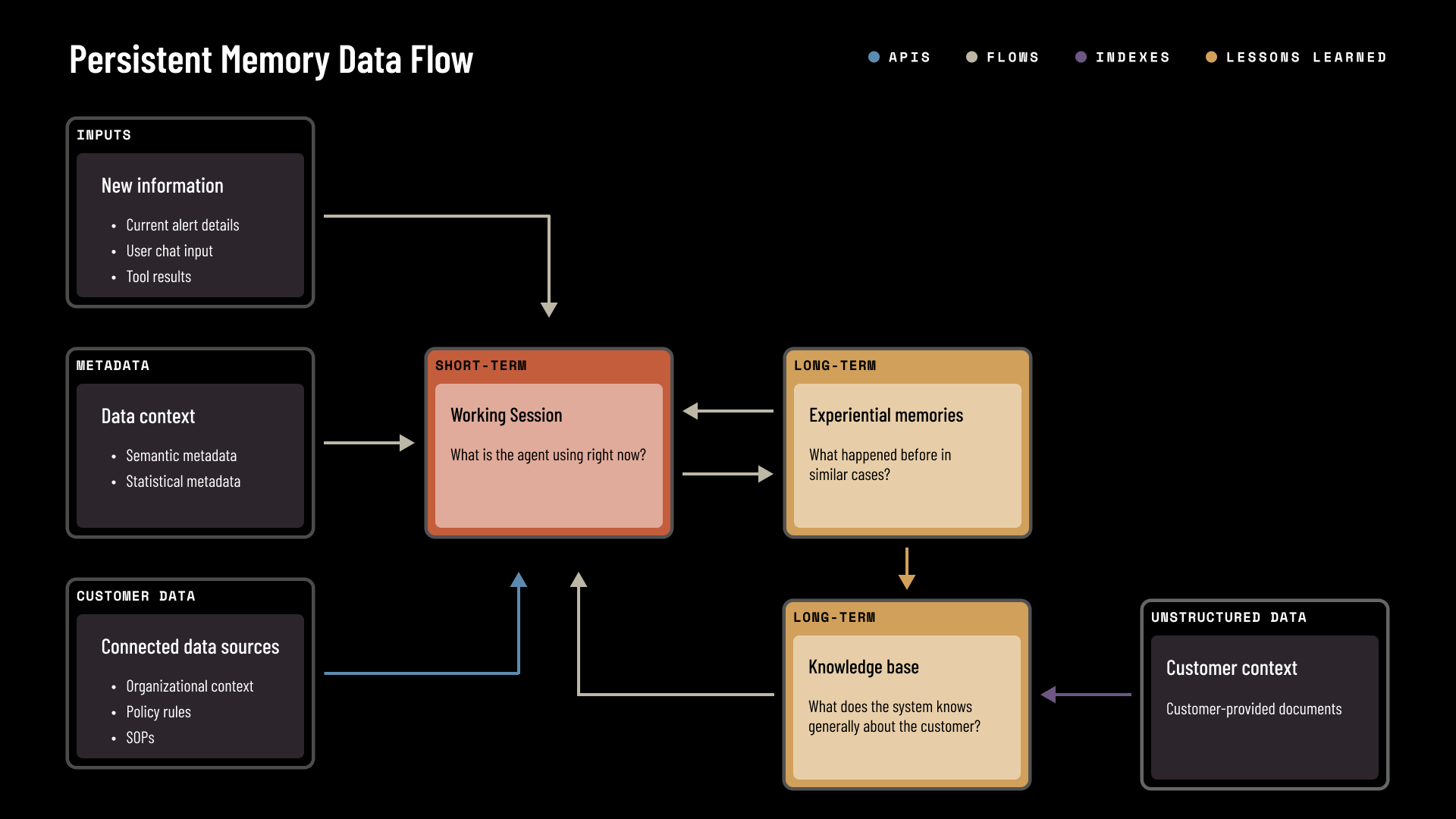

Connecting persistent memory to our Evidentiary AI™ makes it possible to defend any auto-triage decision. Every time you use Andesite, that work shapes your triage going forward. You don’t have to remember it or document it. It’s built into the way you work.
No More Groundhog-Day Triage
SOC analysts often see the same alerts again and again. The challenge is remembering how those alerts were closed. Persistent memory flags when an analyst has seen a similar attack before and shows how it was handled. At Andesite, we call this Experiential Insights because they surface what the AI memory has captured about the current query. In addition to reminding cyber defenders something like “this is what you’ve done in the past,” these insights help them learn from past recommendations, both right and wrong. That is the feedback loop.
Like a living library, persistent memory helps prioritize alerts and reveal connections. It drives smarter triage, enrichment, and investigation, and makes the product more proactive. By showing what was done before in a chain of actions, it helps analysts anticipate what comes next and act faster and with greater confidence.
Persistent Memory Components
Data Dictionary
As the index of all connected data sources, it offers a view of every dataset, field, and path across connectors, helping SOC teams understand what data is available and how to use it.
Dataset Profiling
Continuous, automated measurement of the data in an organization’s connected sources, such as volumes, field population, and gaps, taken where the data lives. Analysts see what they’re querying, and Andesite writes more targeted queries.
Experiential Insights
When an analyst asks a complex question, Andesite surfaces relevant lessons from past investigations as a clearly labeled insight next to its answer, so each investigation builds on the last.
Indicators of Compromise (IOCs)
Technical artifacts, such as IP addresses or file hashes, that suggest an attack is underway or has already occurred. Andesite can search for IOCs from threat reports across an organization’s connected sources.
Knowledge Base
An organization’s own reference materials, such as runbooks, SOPs, and threat intelligence reports, indexed so Andesite can search it during investigations. Security teams control what goes in, and Andesite cites the documents it uses.
Detecting Long-Horizon Threats
Analysts have to stay tactical day to day. Persistent memory has the power of patience. That makes it valuable for slow-moving campaigns, where an attacker may conduct initial reconnaissance and then go quiet for a period of time. Traditional tools struggle to connect the dots on these events. Persistent memory can help.
Andesite uses persistent memory to see threats on a broader canvas and detect wide, long-horizon attacks. It passively accumulates behavioral signals that add up to meaningful intelligence over time. We’re also developing new ways for persistent memory to advance the SOC, including alert prioritization based on historical IOC actions, better-informed threat hunting, and organization-specific IOC knowledge graphs that surface previously unseen patterns.
With Andesite, persistent memory does more than recalling past alerts. It captures insights without manual documentation, helps track long-horizon threats, and strengthens the evidence chain, so cyber defenders can make better, defensible decisions. The more security teams work with Andesite, the more Andesite works for them.