Andesite Achieves FedRAMP High “In Process” Designation

Andesite is one step closer to being FedRAMP Authorized and is now available in the federal marketplace


MCLEAN, Va., Jan. 23, 2025 – Andesite, the Human-AI SOC company, today announced that it has achieved the Federal Risk and Authorization Management Program (FedRAMP) High Impact Level “In Process” designation, officially joining the FedRAMP Marketplace. This milestone reflects Andesite’s commitment to working with federal agencies to secure mission-critical assets and drive cyber resilience to better serve American citizens. 

The “In Process” designation requires formal sponsorship by a federal agency and a thorough assessment conducted by an accredited third-party organization. Andesite is working toward full FedRAMP Authorized status, the highest security and compliance standard for civilian and federal agencies.

“Founded by former intelligence and military leaders, Andesite is rooted in a deep commitment to protecting those who protect others,” said Dave Brown, CISO & CIO at Andesite. “We are honored to bring Andesite’s security solutions to the federal marketplace, empowering those on the frontlines with the insights they need to secure critical infrastructure. We thank our partners who have helped us achieve this significant milestone and look forward to achieving full FedRAMP authorization.”

Andesite’s Human-AI SOC is designed to support cybersecurity teams with actionable insights that matter to their organization’s risk profile. The product automates investigation and enrichment, manages high-volume alerts and threat intelligence, and accelerates time to detect, investigate, and respond, while keeping humans responsible for decisions and outcomes. 

Andesite is secure and compliant by design. From inception, the company has built a security, trust and safety program that permeates all of its practices. Security is at the core of Andesite’s Human-AI SOC product. Their Safe AI Architecture™ protects customers’ data, applications, and networks with end-to-end encryption, no extract, transform, and load (ETL) requirements, and assurance that their AI is not trained on customers’ data.

This recognition from FedRAMP builds on Andesite’s industry-leading security and compliance achievements. It recently achieved HITRUST, SOC 2 Type II, and ISO 27001, 27701, and 42001 certifications. Together, these assessments reflect a consistent approach to security and responsible AI governance across the company’s technology and operations.

To learn more about Andesite and schedule a demo, visit andesite.ai

About Andesite

Andesite’s Human-AI SOC empowers cybersecurity teams with the actionable insights they need to make critical decisions, assess threats, and determine risk levels. It enables them to conduct and automate investigations and enrichment, manage high-volume alerts and process threat intelligence reports in minutes. Andesite’s AI technology connects silos and reduces inefficiencies across data sources, tools and platforms in their security ecosystem, helping SOC teams to accelerate time to detect, investigate and respond. Before Andesite, the company leaders and founders spent decades protecting our nation and some of the largest enterprises on the planet against sophisticated adversaries. Andesite embodies their sense of mission and commitment to develop security products that empower those who work protecting others.

Visit us at andesite.ai, check our trust center at ComplianceHigh.com, and follow us on LinkedIn.

Media Contact:

[email protected] 

Andesite, The Human-AI SOC Company, Achieves HITRUST e1 and AI Security Certifications Demonstrating Commitment to Cybersecurity and Information Protection

Andesite’s Secure and Compliant by Design Framework Continues to Meet the Highest Standards for Security, Privacy and AI Governance.


MCLEAN, Va., Jan. 13, 2026 – Andesite, the Human-AI SOC Company, today announced that its Human-AI Security Operations Center (SOC) has earned certified status from HITRUST for cybersecurity and information protection.

The HITRUST Certification demonstrates that Andesite has met requirements defined by leading cybersecurity and regulatory frameworks, confirming that strong controls are in place to protect sensitive data and manage risk effectively.

The certification also includes the HITRUST AI Security Certification, which validates that the organization’s AI systems are safeguarded against AI-specific threats such as data poisoning, model inversion, and prompt injection.

“Security and regulatory compliance by design is purposely built into Andesite’s foundation,” said Dave Brown, CISO & CIO at Andesite. “Achieving HITRUST Certification reflects the rigor behind how we build and operate at Andesite. It demonstrates that our approach to security, risk management, and information protection is grounded in independently validated controls and designed for organizations with serious security requirements.” 

Built on the HITRUST Assurance Program, this achievement reflects independent third-party testing, centralized quality assurance, and certification backed by HITRUST’s Cyber Threat-Adaptive engine. These elements ensure continuous alignment with the latest threat intelligence and evolving standards across NIST, ISO, and OWASP.

“Earning HITRUST Certification demonstrates Andesite’s commitment to managing information risk and protecting sensitive data through a rigorous, proven assurance process,” said Gregory Webb, CEO of HITRUST. “This achievement reflects the organization’s proactive approach to cybersecurity and trust.”

From inception, Andesite has built a security, trust and safety program that permeates all of its practices. Security is at the core of Andesite’s Human-AI SOC product. Their Safe AI Architecture™ protects customer’s data, applications, and network with end-to-end encryption, no extract, transform, and load (ETL) requirements, and the assurance that their AI is not trained with customers’ data.

Andesite recently completed its SOC 2 Type II audit and ISO 27001, 27701, and 42001 certifications. The company is one of the world’s earliest adopters of all three ISO certifications. 

To learn more about Andesite and schedule a demo, visit andesite.ai

About Andesite

Andesite’s Human-AI SOC empowers cybersecurity teams with the actionable insights they need to make critical decisions, assess threats, and determine risk levels. It enables them to conduct and automate investigations and enrichment, manage high-volume alerts and process threat intelligence reports in minutes. Andesite’s AI technology connects silos and reduces inefficiencies across data sources, tools and platforms in their security ecosystem, helping SOC teams to accelerate time to detect, investigate and respond. Before Andesite, the company leaders and founders spent decades protecting our nation and some of the largest enterprises on the planet against sophisticated adversaries. Andesite embodies their sense of mission and commitment to develop security products that empower those who work protecting others.

Visit us at andesite.ai, check our trust center at ComplianceHigh.com, and follow us on LinkedIn.

Media Contact:
[email protected] 

CISO Perspective | The AI SOC: What CISO Buyers Want to Know—and What They Might Be Missing

By Merritt Baer, Chief Security Officer at Enkrypt AI


The rapid evolution of AI technology in the last couple of years has transformed the way we work, do business, and secure our critical data. This applies across all sectors and specialties, with particular emphasis on data security and privacy in highly regulated industries. With AI permeating virtually every type of software, app, and system being used in enterprise organizations, CISOs face a new challenge that’s complex and multifaceted: how to decide which vendor to trust in the emerging, and already crowded, AI SOC market.

As someone who regularly meets with other CISOs, I wanted to share some insights about how you can best approach AI SOC vendors, what to look for in an AI SOC solution, and what broader contextual understanding will help guide you toward the right decision for your organization. AI is changing the nature of security work altogether, which directly impacts what AI in the SOC looks like in this brave new world.

New Technology Calls for New Metrics

When looking to invest in new software systems, stakeholders, including the Board and the rest of the C-suite, often expect to see key metrics for proof of ROI. The SOC is no exception. With no inherent expertise in this area, they look to the bottom line—for example, asking how much you’re able to reduce head count by investing in an AI SOC tool.

But this is a bit reductive. What you should be asking instead is how the solution will help your existing team work better. With AI changing the nature of work, we need new metrics to demonstrate how implementing AI across your security organization improves processes and outcomes.

For example, I recently met with the CISO of a financial services organization that’s using AI to relieve loan processors from menial daily tasks so they can focus solely on processing loans. This shift in work focus, slightly alters their role in the company. While this is a clear example of AI producing a positive change, it’s a change that would not be reflected in the traditional head count metric. This is the same within the SOC.  An AI SOC doesn’t necessarily reduce the need for people. It just means that the team you do have can  take more of a proactive vs. reactive stance.

The Changing Nature of Data and Security

One of the most important factors to consider when comparing AI SOC tools is that we’re not dealing with the same threat landscape that we were a year ago, or even a month ago. In a world where AI is everywhere, threats show up differently—and must be responded to differently, too. Security behaviors must continuously adapt if you want to stay ahead.

Constant change makes AI essential in the SOC. The question is, can you trust it to work completely autonomously? While I’m all-in on AI, I do believe that human oversight is essential. AI and machine learning can (and should) be trusted to handle volume-heavy tasks with greater speed and accuracy, but humans bring deep contextual knowledge to security work that machines simply can’t mimic. So, that’s the first factor to consider when comparing AI SOC vendors: is the solution fully autonomous, or does it keep humans at the helm?

Adapting to Your Specific Needs

One question I often hear from CISOs is, what are successful enterprises and SOCs doing right when it comes to AI? What are the applications, behaviors, and best-practices that similar organizations are using to deliver the best possible outcomes when deploying AI? While I’m always happy to talk shop with other security experts, it’s important to understand that each SOC is 100% unique, and what works at one organization may not work at another, even if they’re in the same industry and share traits.

The very nature of cyber security today demands tools that are fully customizable and adaptable to your unique needs. Change is constant. Even if an out-of-the-box solution does what you need it to now, it may not be able to meet your needs in the near future. Investing in a customizable AI platform enables you to incorporate it into your security infrastructure in a way that’s thoughtful, meaningful, and impactful, while also being fully adaptable as your SOC needs change. 

Data Processing: To Clean, or Not to Clean

Another important aspect of security operations in this new, AI-fueled world is that the very nature of data itself is changing. It’s proliferating rapidly, and coming from an ever-increasing array of sources—making much of the threat intelligence data your cybersecurity teams deal with unstructured.

Automation can help your SOC handle a higher volume of threat intelligence data. However, it needs to be able to connect all available data sources and tools together, and parse and analyze both structured and unstructured data where it is. The need to extract or ingest data before analysis slows you down, and that won’t cut it in today’s fast-moving threat landscape. When assessing AI vendors, be sure to ask if the proposed solution requires ETL. 

Once all that available data has been analyzed, you also need an AI SOC that surfaces timely, actionable insights. This will enable your security operations team to respond at speed, preventing attacks before the damage is done. It’s not about another tool to the ecosystem. It’s about separating the signal from the noise, enabling them to make smarter, more informed decisions about which threats to respond to first.

The Security of AI Itself

Finally, CISOs must carefully assess the security of the AI used by any vendor they’re considering for the SOC. The risks of AI are well known, which is why we’re seeing increasing data security regulations around its use, from the EU AI Act, to various state-based regulations in the US as well as standards laid out by regulatory bodies such as the International Organization for Standardization (ISO) and the Financial Industry Regulatory Authority (FINRA).

This means that we need repeatable, attestable, defensible — and auditable — security as table stakes for any AI SOC solution, no matter what industry or country regimes . But more importantly, consider how the AI vendor approaches security and safety. Can you trust them to protect your own network, applications, and data? Can you trust the data they use to train the AI? Are you certain they’ll never use your data for this purpose?

With more and more apps in your environment having AI features built into them, whether licensed apps or just the ones employees use in their daily work, the way we think about perimeters and content is changing. This dramatically reduces the time to successful lateral movement. 


About Merritt Baer

Merritt is a security executive based in Miami, FL. She serves as Chief Security Officer to Enkrypt AI, and advises a small handful of young tech companies including Andesite and AppOmni. Merritt served in the Office of the CISO at Amazon Web Services for over five years as a Deputy CISO to help to secure AWS infrastructure, at a vast scale. She worked in security in all three branches of the US Government and the private sector. Her insights on business strategy and tech have been published in Forbes, the The Wall Street Journal, VentureBeat, Tech Crunch, SC Media, The Baltimore Sun, The Daily Beast, LawFare, and Talking Points Memo. She is a graduate of Harvard Law School and Harvard College.

Andesite CEO Brian Carbaugh talks about SecOps and leadership on CyberBytes: The Podcast

Our CEO Brian Carbaugh met with Aspiron’s Oliver Legg to discuss his career from CIA Chief of Staff to Bionic AI SOC startup founder. They talked about how a career in intelligence shaped Brian’s approach to leadership, risk, and company-building, the principles and special sauce that make Andesite unique in the category.


The conversation delves on how Andesite is taking a contrarian stance on AI in the SOC by putting analysts, not automation, at the center, and how the “replace the analyst” narrative gets it wrong.


They talk about how crowded the AI SOC field has become and look at differentiators beyond the hype. Brian explains why he chose a company-builder and foundry model over traditional venture funding and why Andesite has invested on security and compliance from day one.


Introducing the Andesite AI SOC Buyer’s Guide 2026

Cybersecurity today is a veritable minefield, with bad actors moving faster than ever and threats becoming increasingly sophisticated, numerous, and far-ranging. The attack surface is constantly growing, and so is the sheer volume of threats encountered across the network each day. Keeping up with threat detection, investigation, and response in this environment can overwhelm even the most experienced security teams, armed with top-rated tools.


Enter the AI SOC.


With AI transforming the way we work across virtually every sector, applying machine speed and accuracy to the Security Operations Center (SOC) has the potential to revolutionize the way security organizations identify, triage, and respond to threats. Enterprises everywhere are recognizing this potential—and as a result, the emerging AI SOC market is crowded. With new players entering the field all the time, this space is evolving almost as quickly as the cybersecurity landscape itself.


Taken at face value, many of these AI SOC solutions appear comparable, often offering the same set of core features and all promising to deliver outstanding results. However, if you’re looking to arm your security team with the best possible system to reduce risk and stay ahead of threats, you need a more granular idea of what to look for in an AI SOC vendor—and which factors will set the right solution apart from the ever-expanding crowd. The goal should be to give your SOC a tool that allows them to be proactive about threat detection and prevention, rather than always playing catch up. 


Help Decision-Makers Sift Through the Noise


With so many products to choose from, even seasoned CISOs and other decision-makers may find it difficult to know where to invest to address the pain points their organization is facing today while also building a future-focused cyber defense. What’s the smartest approach to figure out which vendor is best suited to your organization’s unique needs, and whether or not an off-the-shelf solution might be the best option? Even knowing where to start can be a challenge.


To help you find the right AI SOC for your team, we’ve put together a buyer’s guide, designed to help CISOs and security teams determine how various AI vendors stack up—and land on the best possible solution. By laying out a clear set of questions to ask, with in-depth insights about the various answers you might encounter, this guide gives you a better understanding of the key factors and functions to consider so you can decide how well they will fit with your needs, goals, and current configuration.


For example, some AI solutions are fully autonomous, meaning the machine does everything, while others keep humans in the loop. What’s the difference in both how they operate and what kind of results they deliver? What are the advantages of each? How about potential drawbacks? Get the guide and we’ll walk you through it.


Other topics we cover include product adaptability, timeliness and actionability of insights, and how products process threat intelligence, including unstructured data and other enrichment sources. As experts in cybersecurity, passionate technologists, and experienced product builders, we’re sharing our unique perspective with the goal of empowering the teams who protect others from sophisticated attackers and adversaries. Use it to elevate your security team and reduce risk exposure by investing in the right AI vendor.  


Give your security organization a clear, step-by-step process for assessing and comparing AI SOC vendors, including a handy checklist to pull it all together and help you make the right choice. Download the The AI SOC Buyer’s Guide 2026 and use it to identify the best AI SOC solution for your unique needs, not just for today but far into the future.


Andesite Achieves SOC 2 Type II and ISO Certifications, Reinforcing Commitment to Data Security Compliance and Safe AI Practices

The Human-AI SOC company on short list of cybersecurity startups to achieve SOC 2 Type II and ISO 27001, 27701, and 42001 certifications.


MCLEAN, Va., Dec. 10, 2025 /PRNewswire/ — Andesite AI (Andesite) today announced the successful completion of its SOC 2 Type II audit and ISO 27001, 27701, and 42001 certifications. Andesite is one of the world’s earliest adopters of all three ISO certifications. These globally recognized standards and frameworks position Andesite at the forefront of compliance and underscore its commitment to safe, secure, and responsible data and AI practices.

To achieve each of these certifications, Andesite underwent a rigorous independent audit conducted by Schellman, a leader in third-party IT and cybersecurity assessments. Earlier this year, Andesite completed its first FedRAMP High security assessment and is working towards certification, satisfying the standardized approach to cloud security for U.S. federal agencies.

The ISO 42001 certification is the world’s first international standard for AI management systems. It establishes a framework for organizations to responsibly develop, deploy, and monitor AI technologies.

“As an AI SaaS company, we want to ensure our customers see our commitment to security, privacy, and trustworthy AI by design,” said Dave Brown, CISO & CIO at Andesite. “This unprecedented combination of certifications demonstrates the excellence of our Compliance High program and positions Andesite as one of the few companies capable of meeting the highest levels of security, privacy, and AI governance. Our customers can trust that their data and systems are protected at every layer.”

Andesite is secure and compliant by design. From inception, the company has built a security, trust and safety program that permeates all of its practices. Security is at the core of Andesite’s Human-AI SOC product. Their Safe AI Architecture™ protects customer’s data, applications, and network with end-to-end encryption, no extract, transform, and load (ETL) requirements, and the assurance that their AI is not trained with customers’ data.

To learn more about Andesite and schedule a demo, visit andesite.ai.


About Andesite
Andesite’s Human-AI SOC empowers cybersecurity teams with actionable insights that matter to their organization’s risk profile. It enables them to conduct and automate investigations and enrichment, manage high-volume alerts and threat intelligence, assess and determine risk levels. Andesite’s AI technology enables SOC teams to accelerate time to detect, investigate and respond while connecting silos and reducing inefficiencies across data sources, tools and platforms in their security ecosystem. Before Andesite, the company leaders and founders spent decades protecting our nation and some of the largest enterprises on the planet against sophisticated adversaries. Andesite embodies their sense of mission and commitment to develop security products that empower those who work protecting others.

Visit us at andesite.ai, check our trust center at ComplianceHigh.com, and follow us on LinkedIn.


Media Contact:
[email protected] 


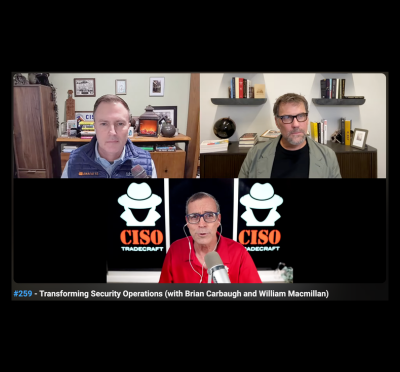
Andesite CEO Brian Carbaugh and CPO William Macmillan discussed SecOps on CISO Tradecraft

Our CEO Brian Carbaugh and CPO William Macmillan joined Mark Hardy for a great episode of CISO Tradecraft. They discussed the Human-AI SOC and how AI is transforming security operations.

They delved into the efficiency, accuracy, and proactive threat detection that AI systems bring to the SOC, and the critical role of contextual data in modern threat detection. The conversation covered the challenges of legacy SIEMs, the benefits of AI to solve for alert fatigue, and the sea change offered by a new SOC architecture.

Watch the full interview here.

Analyst Burnout Is an Advanced Persistent Threat

On Dark Reading, Andesite’s Chief Product Officer William MacMillan writes about how for too long, cybersecurity analysts have been treated as mere cogs in a machine and it’s time to change that and revolutionize security operations.

“In the battle against cyber threats, we’re losing our most vital asset: our people. While the industry fixates on the latest tools and technologies, security analysts are burning out, crushed under the weight of an impossible mission. This isn’t just a talent shortage, but an existential crisis threatening the future of cybersecurity defense. Until we prioritize supporting the humans at the heart of cyber operations, no tool or technology will be enough to keep us secure.

“Security operations centers (SOCs), the heart of cybersecurity, have become pressure cookers of burnout and frustration. The numbers tell a dire story: More than half of SOC analysts have considered leaving the field, and with them goes the institutional knowledge and expertise that take years to develop. Each departure is a victory for malicious actors, who know that even the most sophisticated tools are only as effective as the humans behind them.


A Framework for Human-AI Partnership in the SOC

Andesite’s Chief Product Officer William MacMillan argues on SC Media that so far the attempts to automate the Security Operations Center (SOC) have failed.

Almost 20 years since the rise of the SIEM, and 10 years after SOAR platforms first hit the market, SOCs are still struggling. Analysts are drowning in an “everywhere data” environment, struggling to interpret, prioritize, and respond to seemingly never-ending indicators as close as possible to the speed of threat. Many companies run more than 100 different security tools, forcing analysts to bounce between screens and portals, each with its own query language, while trying to piece together a cohesive investigative narrative. SOC leaders face mounting pressure to deliver on metrics and prove ROI on their growing security budgets.

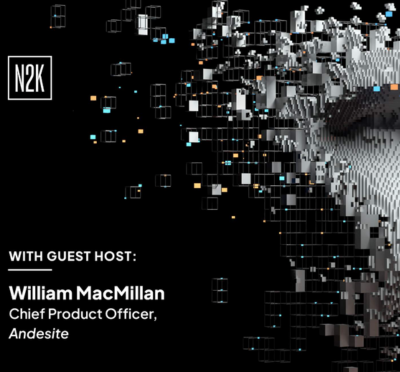
On CISO Perspectives, Andesite’s CPO William MacMillan discusses the state of security automation

Rick Howard, N2K CyberWire’s Chief Analyst and Senior Fellow, turns over hosting duties of his podcast, CISO Perspectives, to William MacMillan, the Chief Product Officer at Andesite, to discuss the Cybersecurity First Principle of automation: current state and what happens now with AI as it applies to SOC Operations.