Andesite Partners with Second Front Systems to Deliver the Human-AI SOC to U.S. Department of War

The partnership fulfills a cornerstone of Andesite’s mission to protect those who protect others. 


MCLEAN, Va., Feb. 10, 2025 — The Department of War and allied government agencies now can deploy advanced Human-Artificial Intelligence (AI) Security Operations Center (SOC) technologies after a new partnership between Andesite AI (Andesite) and Second Front Systems (2F).

Andesite’s Human-AI SOC will be available through 2F Game Warden, Second Front’s DevSecOps platform built to accelerate authorization and deployment across U.S. and allied government environments. The partnership gives government users a faster, authorized way to deploy Andesite’s best-in-class AI security capabilities into real-world operations.

“Andesite was founded by leaders who spent decades operating in environments where trust and security are non-negotiable,” said Brian Carbaugh, Co-Founder and CEO at Andesite. “That experience inspired us to build solutions that support and empower those who protect others. We are honored to partner with Second Front to strengthen AI security capabilities across the public sector.”

Andesite’s bona fides were further bolstered recently as the company secured a strategic investment from IQT, the not-for-profit strategic investor for the U.S. national security community and America’s allies.

“Andesite offers a unique capability built by a diverse team of national security, cybersecurity, AI, and data experts,” said Grant Whiting, Partner, Investments at IQT. “Their solution can help improve national security and keep America one step ahead of its adversaries.”

Andesite’s Human-AI SOC technology empowers cybersecurity and national security teams with actionable insights that matter most to their organization’s risk profile. It accelerates time to detect, investigate, and respond while connecting data silos and reducing inefficiencies across data sources, tools, and platforms in the security ecosystem.

“AI doesn’t win missions—deployed AI does,” said Mamie Cruse, Chief Mission Officer at Second Front. “This partnership reflects our commitment to delivering advanced AI capabilities to government operators through secure, compliant, and mission-ready deployment paths.”

From inception, Andesite has built a security, trust and safety program that permeates all of its practices. Andesite’s Safe AI Architecture™ protects customer data, applications, and networks with end-to-end encryption, no extract, transform, and load (ETL) requirements, and the assurance that their AI is not trained with customers’ data.

Andesite has achieved FedRAMP High In-Process and recently completed its SOC 2 Type II audit, HITRUST e1, and ISO 27001, 27701, and 42001 certifications.

To learn more about Andesite and schedule a demo, visit andesite.ai.


About Andesite
Andesite’s Human-AI SOC empowers cybersecurity teams with the actionable insights they need to make critical decisions, assess threats, and determine risk levels. It enables them to conduct and automate investigations and enrichment, manage high-volume alerts and process threat intelligence reports in minutes. Andesite’s AI technology connects silos and reduces inefficiencies across data sources, tools and platforms in their security ecosystem, helping SOC teams to accelerate time to detect, investigate and respond. Before Andesite, the company leaders and founders spent decades protecting our nation and some of the largest enterprises on the planet against sophisticated adversaries. Andesite embodies their sense of mission and commitment to develop security products that empower those who work protecting others.

Visit us at andesite.ai, check our trust center at ComplianceHigh.com, and follow us on LinkedIn.


About Second Front Systems
Second Front Systems (2F) is a public-benefit software company powering software for the free world. We eliminate the friction that slows innovation, enabling faster, more secure development and deployment of software across government and regulated networks. Built by national security veterans and backed by top-tier venture capital, our platform is trusted by the world’s leading organizations to cut deployment timelines from years to weeks. We move fast, solve hard problems, and deliver trusted capabilities where they’re needed most. Our work strengthens global security and gives the United States and its allies a lasting competitive advantage. Learn more at secondfront.com.

Media Contact:
[email protected] 

451 Research Looks at the Impact of AI on the SOC

To gain perspective on the effects of AI in cyber defense, we have partnered with 451 Research by S&P Global Market Intelligence to publish a Business Impact Brief analyzing the state of the Security Operations Center (SOC) and the impact of AI on its evolution. 

The brief is based on the 451 Research Voice of the Enterprise: Information Security survey, which tracks security professionals across industries since 2020. The survey found that on average, security teams are unable to investigate 45% of the alerts they receive each day. For 18% of the organizations, 75% of the alerts received go uninvestigated. 

The brief analyzes the challenges security teams are facing in the AI-driven threat landscape and assesses the potential business impact of AI SOC solutions across a range of factors, including threat detection, agent-driven remediation, and newly accessible use cases. It also includes predictions for how both attacks and responses will evolve in the near future and how AI will help to transform the role of SOC analysts. 


The 451 Research Voice of the Enterprise: Information Security survey has found out that SOC teams are unable to investigate 45% of the security analytics alerts they  receive each day. 


Adversaries are using AI to accelerate and rapidly scale attacks, creating significant challenges for security operations teams. As cyber threats proliferate and take a multitude of forms, the volume of data has left many teams experiencing alert fatigue, which poses a major security risk. 

SOC analysts need the ability to quickly review and assess unstructured data from a variety of sources, without moving or reshaping it. Many security teams are seeking to establish a robust data foundation, or data fabric, which allows analysts to identify, triage, and prioritize the most high-risk threats before they inflict damage. 

According to 451 Research, deploying advanced AI-powered systems and data solutions in the SOC is essential to create a single, governed source of truth. Ensuring universal data access enables analysts to automate mundane, repetitive tasks and use their experience, expertise, and contextual awareness to keep the organization safe.


Andesite Achieves Cloud Security Alliance AI-STAR Level 2 Certification, Validating Commitment to Secure and Transparent AI Systems

Andesite becomes the third company in the world to achieve the CSA AI-STAR Level 2 certification


MCLEAN, Va., Jan. 28, 2025 – Andesite, the Human-AI SOC company, today announced that it has earned Level 2 certification under the Cloud Security Alliance (CSA) AI-STAR program, following an independent assessment of the company’s AI security, risk management, and governance practices. The certification confirms that Andesite has implemented and operationalized globally recognized standards for the responsible development and use of AI in security-critical environments. Andesite is only the third company in the world to achieve the certification. 

Andesite is also CSA STAR Level 2 certified, a rigorous third-party assessment of Andesite’s cloud security operations.

The new CSA STAR for AI framework is a parallel Level-2 certification within the CSA STAR program that focuses on AI governance. It provides a transparent, expert-driven, and consensus-based platform for organizations to assess, demonstrate, and ensure AI trustworthiness through third-party audits. 

With these certifications, Andesite’s Human-AI SOC meets the expectations of organizations operating in highly regulated and high-risk environments, where AI systems must be secure, auditable, and governed with discipline. Andesite also previously signed the CSA AI Trustworthy Pledge, a public commitment to develop and manage AI responsibly.

“Organizations deploying AI in security operations need proof, not promises, which is why CSA STAR and AI-STAR Level 2 are essential,” said Dave Brown, CISO & CIO at Andesite. “More importantly, by becoming the third company in the world to achieve AI-STAR Level 2 certification, Andesite is showing that our approach to AI governance, security, and risk management stands up to independent scrutiny and operates the way customers expect in high-risk environments.”

Andesite’s Human-AI SOC is designed to support cybersecurity teams with actionable insights that matter to their organization’s risk profile. The product automates investigation and enrichment, manages high-volume alerts and threat intelligence, and accelerates time to detect, investigate, and respond, while keeping humans responsible for decisions and outcomes. 

Andesite is secure and compliant by design. From inception, the company has built a security, trust and safety program that permeates all of its practices. Security is at the core of Andesite’s Human-AI SOC product. Their Safe AI Architecture™ protects customers’ data, applications, and networks with end-to-end encryption, no extract, transform, and load (ETL) requirements, and assurance that their AI is not trained on customers’ data.

The AI-STAR Level 2 certification builds on Andesite’s broader compliance posture, which includes SOC 2 Type II, ISO 27001, 27701, and 42001, and HITRUST certifications. Together, these assessments reflect a consistent approach to security and responsible AI governance across the company’s technology and operations.

To learn more about Andesite and schedule a demo, visit andesite.ai

About Andesite

Andesite’s Human-AI SOC empowers cybersecurity teams with the actionable insights they need to make critical decisions, assess threats, and determine risk levels. It enables them to conduct and automate investigations and enrichment, manage high-volume alerts and process threat intelligence reports in minutes. Andesite’s AI technology connects silos and reduces inefficiencies across data sources, tools and platforms in their security ecosystem, helping SOC teams to accelerate time to detect, investigate and respond. Before Andesite, the company leaders and founders spent decades protecting our nation and some of the largest enterprises on the planet against sophisticated adversaries. Andesite embodies their sense of mission and commitment to develop security products that empower those who work protecting others.

Visit us at andesite.ai, check our trust center at ComplianceHigh.com, and follow us on LinkedIn.

Media Contact:

[email protected] 

What’s Next for AI-Powered Cybersecurity – Insights From Andesite Leaders and Advisors

While AI-powered cybersecurity redefines our field and the broader landscape is impacted by geopolitical conflicts and world events, the industry needs to revisit strategies and rules of engagement. 


At Andesite, we are dedicated to arming cybersecurity teams with actionable insights that put humans at the helm, enabling them to make critical decisions, and build a sustainable advantage based on prevention rather than reaction. To help you stay one step ahead, we gathered Andesite’s leaders and advisors to get their insights on where security technology for the enterprise market is going. 


“Investigation timelines for SOC teams that embrace AI SOC tech will accelerate dramatically, shifting the focus from investigation speed to investigation quality.”

— William MacMillan, Chief Product Officer, Andesite


To prepare for what’s next and empower your team to assess risk and make critical decisions, tap into strategic insights from seasoned security experts who’ve served global organizations including the CIA, Microsoft, JP Morgan Chase, CrowdStrike, and AWS. 


Expert insights from security leaders:

  • William MacMillan Chief Product Officer, Andesite
  • Greg Rattray Chief Strategy and Risk Officer, Andesite
  • Alex Thaman Chief Technology Officer, Andesite
  • Merritt Baer Andesite Advisor, Chief Strategy Officer, Enkrypt.AI
  • Kris Merritt Andesite Advisor, Founder & President, Vector8, Inc.


CISO Perspective | The AI SOC: What CISO Buyers Want to Know—and What They Might Be Missing

By Merritt Baer, Chief Security Officer at Enkrypt AI


The rapid evolution of AI technology in the last couple of years has transformed the way we work, do business, and secure our critical data. This applies across all sectors and specialties, with particular emphasis on data security and privacy in highly regulated industries. With AI permeating virtually every type of software, app, and system being used in enterprise organizations, CISOs face a new challenge that’s complex and multifaceted: how to decide which vendor to trust in the emerging, and already crowded, AI SOC market.

As someone who regularly meets with other CISOs, I wanted to share some insights about how you can best approach AI SOC vendors, what to look for in an AI SOC solution, and what broader contextual understanding will help guide you toward the right decision for your organization. AI is changing the nature of security work altogether, which directly impacts what AI in the SOC looks like in this brave new world.

New Technology Calls for New Metrics

When looking to invest in new software systems, stakeholders, including the Board and the rest of the C-suite, often expect to see key metrics for proof of ROI. The SOC is no exception. With no inherent expertise in this area, they look to the bottom line—for example, asking how much you’re able to reduce head count by investing in an AI SOC tool.

But this is a bit reductive. What you should be asking instead is how the solution will help your existing team work better. With AI changing the nature of work, we need new metrics to demonstrate how implementing AI across your security organization improves processes and outcomes.

For example, I recently met with the CISO of a financial services organization that’s using AI to relieve loan processors from menial daily tasks so they can focus solely on processing loans. This shift in work focus, slightly alters their role in the company. While this is a clear example of AI producing a positive change, it’s a change that would not be reflected in the traditional head count metric. This is the same within the SOC.  An AI SOC doesn’t necessarily reduce the need for people. It just means that the team you do have can  take more of a proactive vs. reactive stance.

The Changing Nature of Data and Security

One of the most important factors to consider when comparing AI SOC tools is that we’re not dealing with the same threat landscape that we were a year ago, or even a month ago. In a world where AI is everywhere, threats show up differently—and must be responded to differently, too. Security behaviors must continuously adapt if you want to stay ahead.

Constant change makes AI essential in the SOC. The question is, can you trust it to work completely autonomously? While I’m all-in on AI, I do believe that human oversight is essential. AI and machine learning can (and should) be trusted to handle volume-heavy tasks with greater speed and accuracy, but humans bring deep contextual knowledge to security work that machines simply can’t mimic. So, that’s the first factor to consider when comparing AI SOC vendors: is the solution fully autonomous, or does it keep humans at the helm?

Adapting to Your Specific Needs

One question I often hear from CISOs is, what are successful enterprises and SOCs doing right when it comes to AI? What are the applications, behaviors, and best-practices that similar organizations are using to deliver the best possible outcomes when deploying AI? While I’m always happy to talk shop with other security experts, it’s important to understand that each SOC is 100% unique, and what works at one organization may not work at another, even if they’re in the same industry and share traits.

The very nature of cyber security today demands tools that are fully customizable and adaptable to your unique needs. Change is constant. Even if an out-of-the-box solution does what you need it to now, it may not be able to meet your needs in the near future. Investing in a customizable AI platform enables you to incorporate it into your security infrastructure in a way that’s thoughtful, meaningful, and impactful, while also being fully adaptable as your SOC needs change. 

Data Processing: To Clean, or Not to Clean

Another important aspect of security operations in this new, AI-fueled world is that the very nature of data itself is changing. It’s proliferating rapidly, and coming from an ever-increasing array of sources—making much of the threat intelligence data your cybersecurity teams deal with unstructured.

Automation can help your SOC handle a higher volume of threat intelligence data. However, it needs to be able to connect all available data sources and tools together, and parse and analyze both structured and unstructured data where it is. The need to extract or ingest data before analysis slows you down, and that won’t cut it in today’s fast-moving threat landscape. When assessing AI vendors, be sure to ask if the proposed solution requires ETL. 

Once all that available data has been analyzed, you also need an AI SOC that surfaces timely, actionable insights. This will enable your security operations team to respond at speed, preventing attacks before the damage is done. It’s not about another tool to the ecosystem. It’s about separating the signal from the noise, enabling them to make smarter, more informed decisions about which threats to respond to first.

The Security of AI Itself

Finally, CISOs must carefully assess the security of the AI used by any vendor they’re considering for the SOC. The risks of AI are well known, which is why we’re seeing increasing data security regulations around its use, from the EU AI Act, to various state-based regulations in the US as well as standards laid out by regulatory bodies such as the International Organization for Standardization (ISO) and the Financial Industry Regulatory Authority (FINRA).

This means that we need repeatable, attestable, defensible — and auditable — security as table stakes for any AI SOC solution, no matter what industry or country regimes . But more importantly, consider how the AI vendor approaches security and safety. Can you trust them to protect your own network, applications, and data? Can you trust the data they use to train the AI? Are you certain they’ll never use your data for this purpose?

With more and more apps in your environment having AI features built into them, whether licensed apps or just the ones employees use in their daily work, the way we think about perimeters and content is changing. This dramatically reduces the time to successful lateral movement. 


About Merritt Baer

Merritt is a security executive based in Miami, FL. She serves as Chief Security Officer to Enkrypt AI, and advises a small handful of young tech companies including Andesite and AppOmni. Merritt served in the Office of the CISO at Amazon Web Services for over five years as a Deputy CISO to help to secure AWS infrastructure, at a vast scale. She worked in security in all three branches of the US Government and the private sector. Her insights on business strategy and tech have been published in Forbes, the The Wall Street Journal, VentureBeat, Tech Crunch, SC Media, The Baltimore Sun, The Daily Beast, LawFare, and Talking Points Memo. She is a graduate of Harvard Law School and Harvard College.

Introducing the Andesite AI SOC Buyer’s Guide 2026

Cybersecurity today is a veritable minefield, with bad actors moving faster than ever and threats becoming increasingly sophisticated, numerous, and far-ranging. The attack surface is constantly growing, and so is the sheer volume of threats encountered across the network each day. Keeping up with threat detection, investigation, and response in this environment can overwhelm even the most experienced security teams, armed with top-rated tools.


Enter the AI SOC.


With AI transforming the way we work across virtually every sector, applying machine speed and accuracy to the Security Operations Center (SOC) has the potential to revolutionize the way security organizations identify, triage, and respond to threats. Enterprises everywhere are recognizing this potential—and as a result, the emerging AI SOC market is crowded. With new players entering the field all the time, this space is evolving almost as quickly as the cybersecurity landscape itself.


Taken at face value, many of these AI SOC solutions appear comparable, often offering the same set of core features and all promising to deliver outstanding results. However, if you’re looking to arm your security team with the best possible system to reduce risk and stay ahead of threats, you need a more granular idea of what to look for in an AI SOC vendor—and which factors will set the right solution apart from the ever-expanding crowd. The goal should be to give your SOC a tool that allows them to be proactive about threat detection and prevention, rather than always playing catch up. 


Help Decision-Makers Sift Through the Noise


With so many products to choose from, even seasoned CISOs and other decision-makers may find it difficult to know where to invest to address the pain points their organization is facing today while also building a future-focused cyber defense. What’s the smartest approach to figure out which vendor is best suited to your organization’s unique needs, and whether or not an off-the-shelf solution might be the best option? Even knowing where to start can be a challenge.


To help you find the right AI SOC for your team, we’ve put together a buyer’s guide, designed to help CISOs and security teams determine how various AI vendors stack up—and land on the best possible solution. By laying out a clear set of questions to ask, with in-depth insights about the various answers you might encounter, this guide gives you a better understanding of the key factors and functions to consider so you can decide how well they will fit with your needs, goals, and current configuration.


For example, some AI solutions are fully autonomous, meaning the machine does everything, while others keep humans in the loop. What’s the difference in both how they operate and what kind of results they deliver? What are the advantages of each? How about potential drawbacks? Get the guide and we’ll walk you through it.


Other topics we cover include product adaptability, timeliness and actionability of insights, and how products process threat intelligence, including unstructured data and other enrichment sources. As experts in cybersecurity, passionate technologists, and experienced product builders, we’re sharing our unique perspective with the goal of empowering the teams who protect others from sophisticated attackers and adversaries. Use it to elevate your security team and reduce risk exposure by investing in the right AI vendor.  


Give your security organization a clear, step-by-step process for assessing and comparing AI SOC vendors, including a handy checklist to pull it all together and help you make the right choice. Download the The AI SOC Buyer’s Guide 2026 and use it to identify the best AI SOC solution for your unique needs, not just for today but far into the future.


Andesite Achieves SOC 2 Type II and ISO Certifications, Reinforcing Commitment to Data Security Compliance and Safe AI Practices

The Human-AI SOC company on short list of cybersecurity startups to achieve SOC 2 Type II and ISO 27001, 27701, and 42001 certifications.


MCLEAN, Va., Dec. 10, 2025 /PRNewswire/ — Andesite AI (Andesite) today announced the successful completion of its SOC 2 Type II audit and ISO 27001, 27701, and 42001 certifications. Andesite is one of the world’s earliest adopters of all three ISO certifications. These globally recognized standards and frameworks position Andesite at the forefront of compliance and underscore its commitment to safe, secure, and responsible data and AI practices.

To achieve each of these certifications, Andesite underwent a rigorous independent audit conducted by Schellman, a leader in third-party IT and cybersecurity assessments. Earlier this year, Andesite completed its first FedRAMP High security assessment and is working towards certification, satisfying the standardized approach to cloud security for U.S. federal agencies.

The ISO 42001 certification is the world’s first international standard for AI management systems. It establishes a framework for organizations to responsibly develop, deploy, and monitor AI technologies.

“As an AI SaaS company, we want to ensure our customers see our commitment to security, privacy, and trustworthy AI by design,” said Dave Brown, CISO & CIO at Andesite. “This unprecedented combination of certifications demonstrates the excellence of our Compliance High program and positions Andesite as one of the few companies capable of meeting the highest levels of security, privacy, and AI governance. Our customers can trust that their data and systems are protected at every layer.”

Andesite is secure and compliant by design. From inception, the company has built a security, trust and safety program that permeates all of its practices. Security is at the core of Andesite’s Human-AI SOC product. Their Safe AI Architecture™ protects customer’s data, applications, and network with end-to-end encryption, no extract, transform, and load (ETL) requirements, and the assurance that their AI is not trained with customers’ data.

To learn more about Andesite and schedule a demo, visit andesite.ai.


About Andesite
Andesite’s Human-AI SOC empowers cybersecurity teams with actionable insights that matter to their organization’s risk profile. It enables them to conduct and automate investigations and enrichment, manage high-volume alerts and threat intelligence, assess and determine risk levels. Andesite’s AI technology enables SOC teams to accelerate time to detect, investigate and respond while connecting silos and reducing inefficiencies across data sources, tools and platforms in their security ecosystem. Before Andesite, the company leaders and founders spent decades protecting our nation and some of the largest enterprises on the planet against sophisticated adversaries. Andesite embodies their sense of mission and commitment to develop security products that empower those who work protecting others.

Visit us at andesite.ai, check our trust center at ComplianceHigh.com, and follow us on LinkedIn.


Media Contact:
[email protected] 


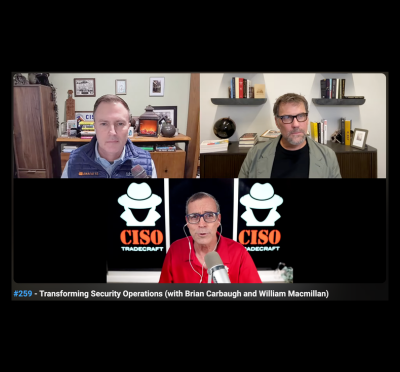
Andesite CEO Brian Carbaugh and CPO William Macmillan discussed SecOps on CISO Tradecraft

Our CEO Brian Carbaugh and CPO William Macmillan joined Mark Hardy for a great episode of CISO Tradecraft. They discussed the Human-AI SOC and how AI is transforming security operations.

They delved into the efficiency, accuracy, and proactive threat detection that AI systems bring to the SOC, and the critical role of contextual data in modern threat detection. The conversation covered the challenges of legacy SIEMs, the benefits of AI to solve for alert fatigue, and the sea change offered by a new SOC architecture.

Watch the full interview here.

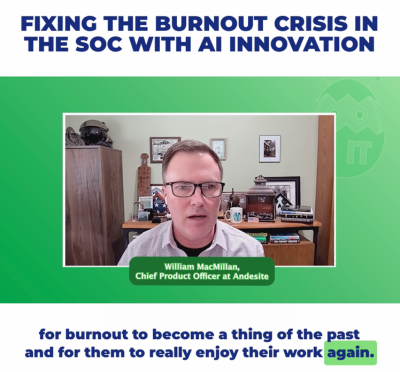
Andesite CPO William MacMillan discusses the SOC burnout crisis at The Pair Program

Our Chief Product Officer, William MacMillan, and Lucas Moody, SVP & CISO at Alteryx, joined the crew at HatchPad’s The Pair Program to discuss a pressing issue: SOC analysts burnout.

The conversation focused on how to reverse the skyrocketing burnout in SOC teams, and how AI can support rather than replace analysts. They emphasized the role of curiosity and creativity in modern cybersecurity and why junior analysts are essential to ensure a sustainable future for cyber defense.

MacMillan shared insights about the shift towards an AI-driven decision-layer built to empower analysts and what is next for Human-AI collaboration in cybersecurity.


AI can help the industry finally get SOC automation right

Andesite’s Chief Product Officer William MacMillan writes about how “despite massive investment in tools and technologies, many SOCs still find themselves overwhelmed by the very chaos they aim to control.”

“Analysts are drowning in data, jumping between disconnected tools, and trying to make sense of endless alerts. The result? An epidemic of burnout among the talented security professionals who are critical to keeping organizations safe.

“This has become particularly acute for state and local government security teams that must protect critical infrastructure and sensitive citizen data with typically smaller budgets and staff than their federal or private-sector counterparts.

“Despite this challenge, today we’re seeing states significantly increase cybersecurity investments, with initiatives like the proposed $88 million Cyber Command in Texas and New York’s enhanced cybersecurity funding for its Joint Security Operations Center.

“The root cause lies in a fundamental misconception about security operations. For decades, we’ve tried to impose rigid structure on inherently unstructured problems. Various products promised to bring order through centralization and automation. Instead, they often added layers of complexity, transforming threat hunting from finding a needle in a haystack to finding the right needle in a stack of needles.